
Finding Honolulu Residents Responsibly
Begin with the record that matches the known fact. The Honolulu Real Property Assessment Division connects a site address to a tax map key, or TMK, and the owner shown on the parcel account. The Bureau of Conveyances connects that owner to recorded land documents. A name can also be checked in the Judiciary's case index, the professional license database, or the State's business records. Older searches belong in the State Archives, Hawaiʻi State Library, and UH eVols collections.
Each result proves only what its custodian records. A tax roll names an owner, not every occupant. A court index shows a party in a case, not a home address. Online voter registration is a personal verification tool, while a lawful public-file request has separate limits. The Honolulu residents directory works best as a route among these sources, with names, dates, TMKs, and document numbers kept separate until they agree.
- Enter a site address or TMK in the Honolulu property search and save the exact parcel number.
- Use a confirmed name in eCourt Kōkua, MyPVL, or the business registry, then compare roles and dates.
- Follow land ownership through Bureau of Conveyances document numbers when the parcel matters.
- For an older household, move to city directories, census schedules, newspapers, and archive indexes.
- When the needed public record is offline, contact its custodian or make a focused UIPA request.
Honolulu Directory Record Keepers
Honolulu's consolidated city-county does not mirror a mainland courthouse system. Land records are kept by the statewide Hawaiʻi Bureau of Conveyances. Real property accounts come from the City and County of Honolulu. State courts keep case files, and the Department of Health controls certified vital records. That split matters. It tells a searcher which office can verify a result and where to go when a web portal stops. Detailed address work belongs in the Honolulu street directory.
Hawaiʻi Bureau of Conveyances
1151 Punchbowl Street, Room 123
Honolulu, HI 96813
808-587-0154
Real Property Assessment Division
842 Bethel Street
Honolulu, HI 96813
808-768-3799
Honolulu Elections Division
530 South King Street, Room 100
Honolulu, HI 96813
808-768-3800
Honolulu Property Search Fields
The free QPublic handoff is an address-first tool. It accepts a site address or parcel/TMK. The result can show the owner name, mailing address, parcel description, assessment, sales, and related tax facts. No public owner-name input was found in the inspected interface, so a name alone is a poor starting point. Use the physical address to reach the account, then treat the displayed owner as a lead.
| Field | Use in the directory search |
|---|---|
| Site address | Find the physical Oʻahu parcel |
| Parcel or TMK | Use the durable tax-map identifier |
| Owner result | Identify the titled party, not all residents |
| Mailing address | Check where tax notices go |
The Honolulu QPublic search screen shows the address and TMK entry points.
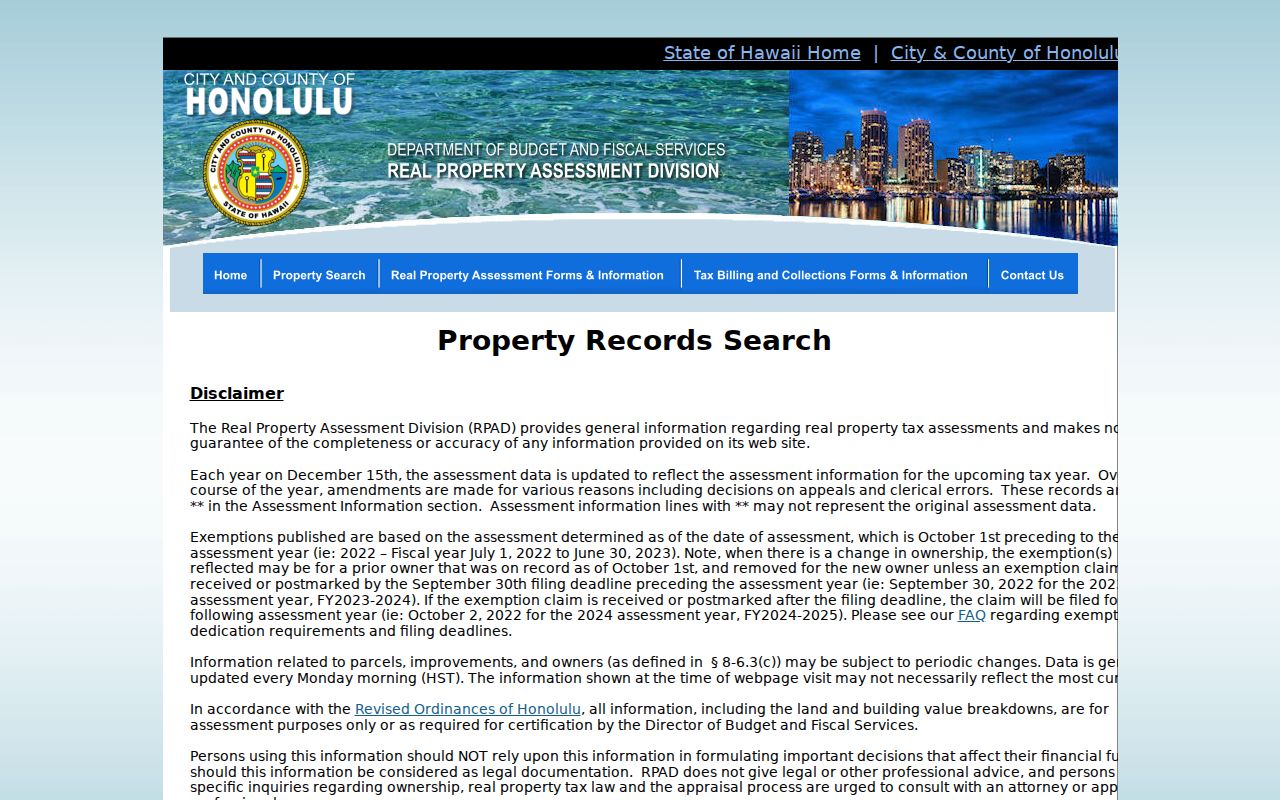
The screen reinforces the key limit: address and parcel inputs lead the search, while ownership appears only after a matching account is opened.
Oʻahu Deeds Use Statewide Records
The Bureau of Conveyances is the controlling land-record index for Honolulu County and all Hawaiʻi counties. Its Regular System and Land Court records do not sit with a Honolulu county recorder. Online property records generally reach 1976. Earlier work moves to the Public Reference Room or a written search, where old Liber, book, page, and document references help staff bridge the chain.
The online service uses grantor and grantee names, document number, dates, and land-system context. A grantor gives an interest; a grantee receives one. Search results may offer watermarked or blurred images until a copy is bought. The Bureau says it processes more than 344,000 documents and maps each year, a useful warning that broad surname searches need tight dates and filters.
The Bureau of Conveyances search entry makes the account gate and ordering path clear.
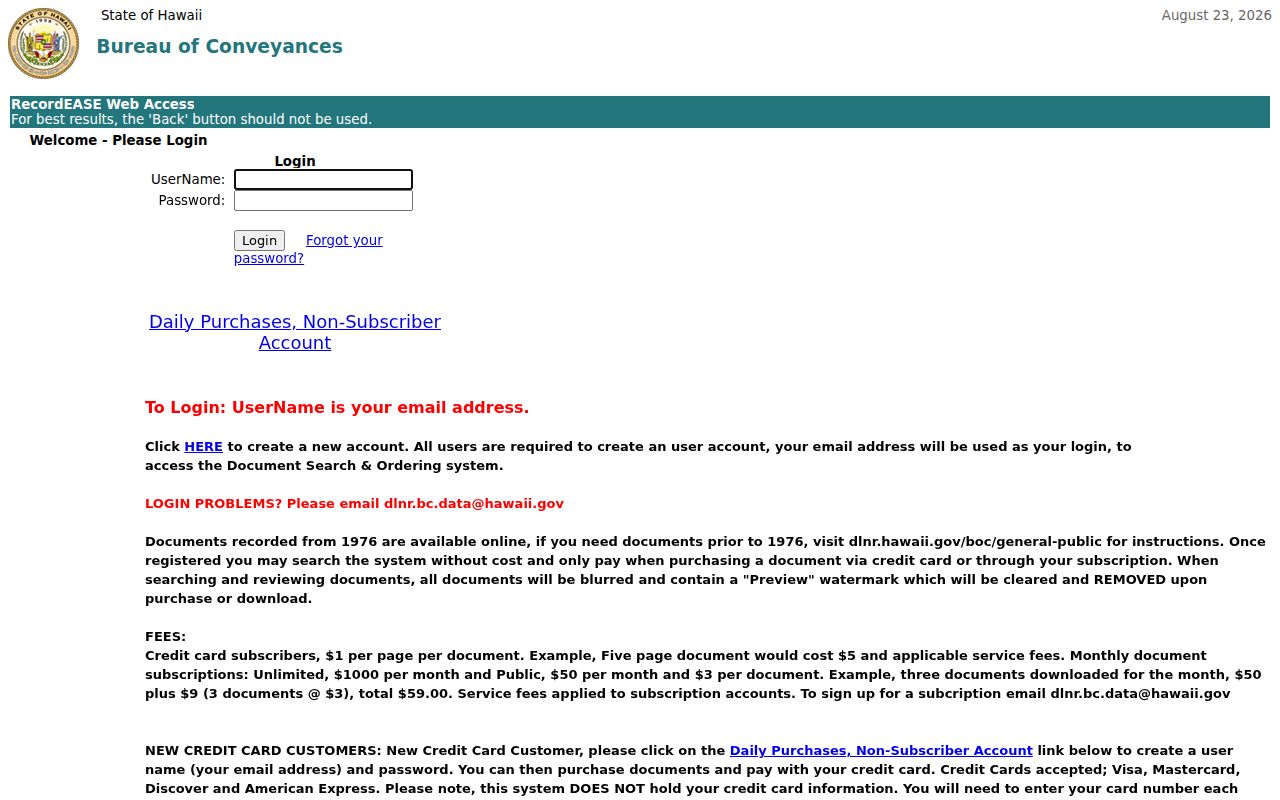
A deed can establish title and a mailing address, but it does not prove that the named party occupies the Oʻahu parcel today.
Current Honolulu Directory Sources
A current Honolulu residents directory must separate public ownership, voter status, court participation, licenses, and civic roles. These are different populations. The most useful source is the one whose purpose matches the question, followed by a second source that can confirm the same identity without stretching what the first record means.
| Source | Who It Lists | Keeper | Access |
|---|---|---|---|
| RPAD property roll | Parcel owners | Honolulu RPAD | Free address/TMK search |
| Voter registration | Registered voters | County Elections Division | Personal check or lawful file request |
| Conveyance index | Parties to recorded land documents | Hawaiʻi BOC | Account search; copies may cost |
| eCourt Kōkua | Public court parties | State Judiciary | Free index; some documents paid |
| MyPVL | Licensed people and firms | Hawaiʻi DCCA | Free name or license search |
Property and deed results are best for title questions. eCourt Kōkua can distinguish a case party by court, case type, role, and date. MyPVL confirms a state license, status, original date, expiration, and discipline where available. A focused Honolulu resident lookup shows how to match one name across those official indexes.
Honolulu Voter Records Are Split
Hawaiʻi Online Voter Registration lets a person confirm or update their own record with a Hawaiʻi driver license or state ID and the last four digits of a Social Security number. That protected flow is not an open residents directory. Under HRS §11-97, the public portion of the voter record is limited to full name, district or precinct, and voter status. Other affidavit details remain confidential except for authorized election or government uses.
A public-file need goes through the County Elections Division rather than a casual block search. Paper registration, office contact, and a focused request remain available when the self-service portal is not the right channel. The Hawaiʻi voter portal shows the identity requirements.
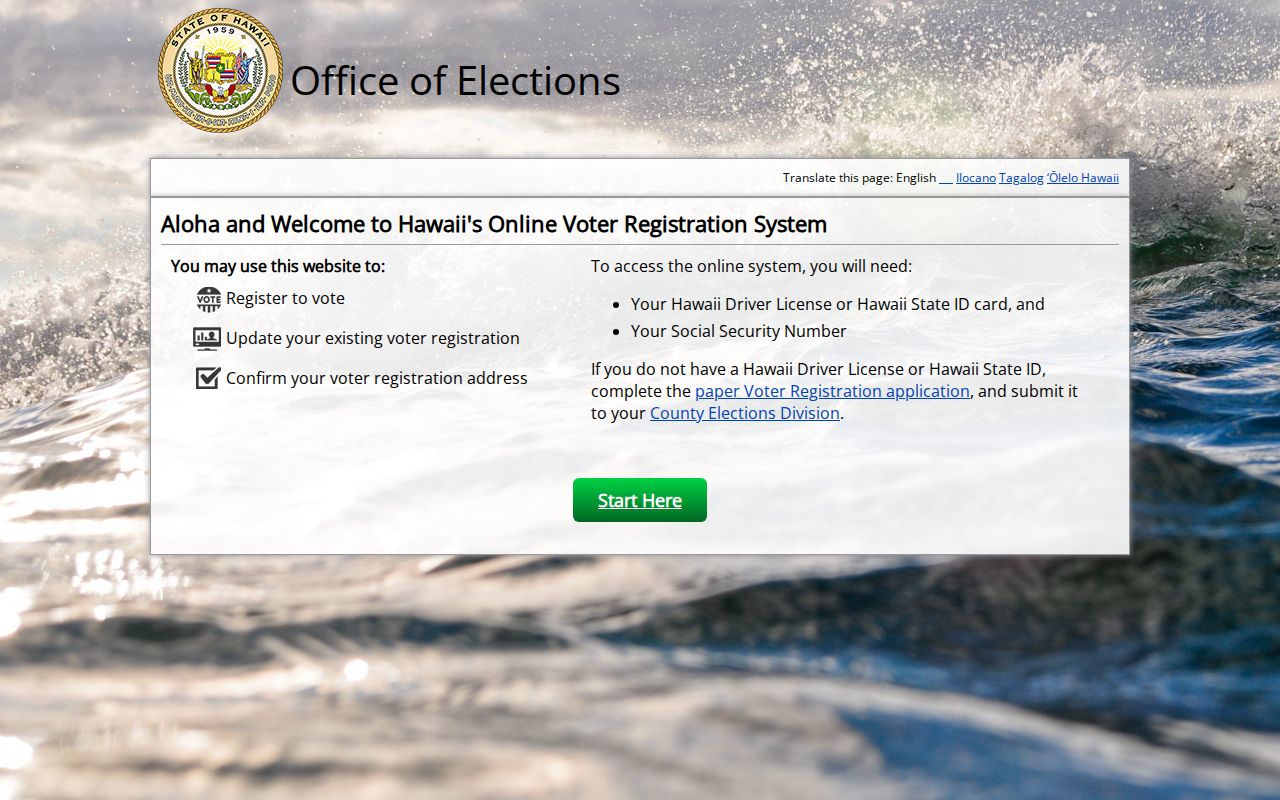
The login requirements mark a firm line between checking one's own registration and obtaining the narrow public fields allowed by law.
Confirm Honolulu Names in Court
eCourt Kōkua covers public information from Oʻahu District, Circuit, Family, Land Court, Tax Appeal, appellate, traffic, criminal, and civil matters. Search modes include party, case, hearing, and vehicle details. Party results need context: role, case type, court, filing date, and disposition help separate people with the same name. The interface caps a result set at 200, so add filters instead of treating the first match as the right person.
Many documents can be viewed or bought through the case record, but sealed, confidential, juvenile, and older material may be missing. Free courthouse terminals and the clerk are the fallback. A court-record request may be sent by mail, email, fax, or delivered in person with enough case detail for staff to locate the file.
The eCourt Kōkua landing page displays the public search choices.
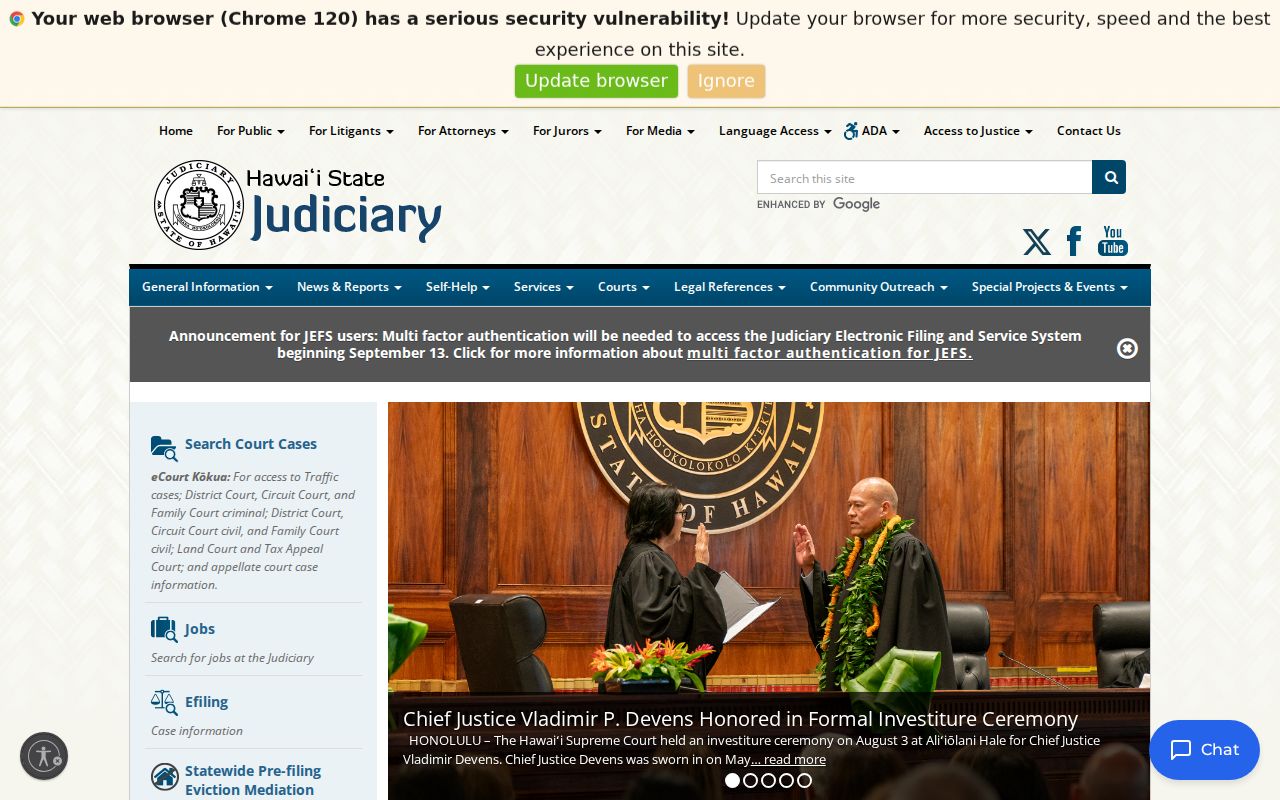
The separate search paths show why a name should be paired with case type, court, role, or date before drawing a conclusion.
Honolulu Vital Records Stay Restricted
The Hawaiʻi Department of Health Office of Health Status Monitoring issues certified birth, death, marriage, and civil-union records only to people with a direct and tangible interest under HRS §338-18. The online order is an exact-match process, not an open name index. Eligible users may order online, by mail, or at the Oʻahu counter with identification and proof of the relationship or authority claimed.
Historic research follows another track. State Archives indexes cover Oʻahu vital statistics from 1832 through 1929, though early reporting is incomplete. DOH genealogy rules permit microfilm or copies for events more than 115 years old. On February 1, 2026, DOH stopped maintaining divorce records; Oʻahu requests now go to the First Circuit legal-document branches in Honolulu or Kapolei.
Lawful use. Honolulu records support family history, estate work, civic research, and personal verification. Stop any search that could invade a protected address or enable harassment.
Historical Honolulu Resident Directories
Honolulu directories cross the Kingdom, Territory, and City and County eras. State Archives hard copies and UH eVols scans include selected volumes from 1880-81 through 1924. Hamilton Library and the Hawaiʻi State Library extend the shelf through Polk-Husted and later Polk volumes, telephone books, microfilm, and microfiche. A printed entry may give a surname, initials, spouse notation, occupation, employer, and street address, but the abbreviation key must be read for that exact edition.
The State Archives directory holdings link the verified scan years.
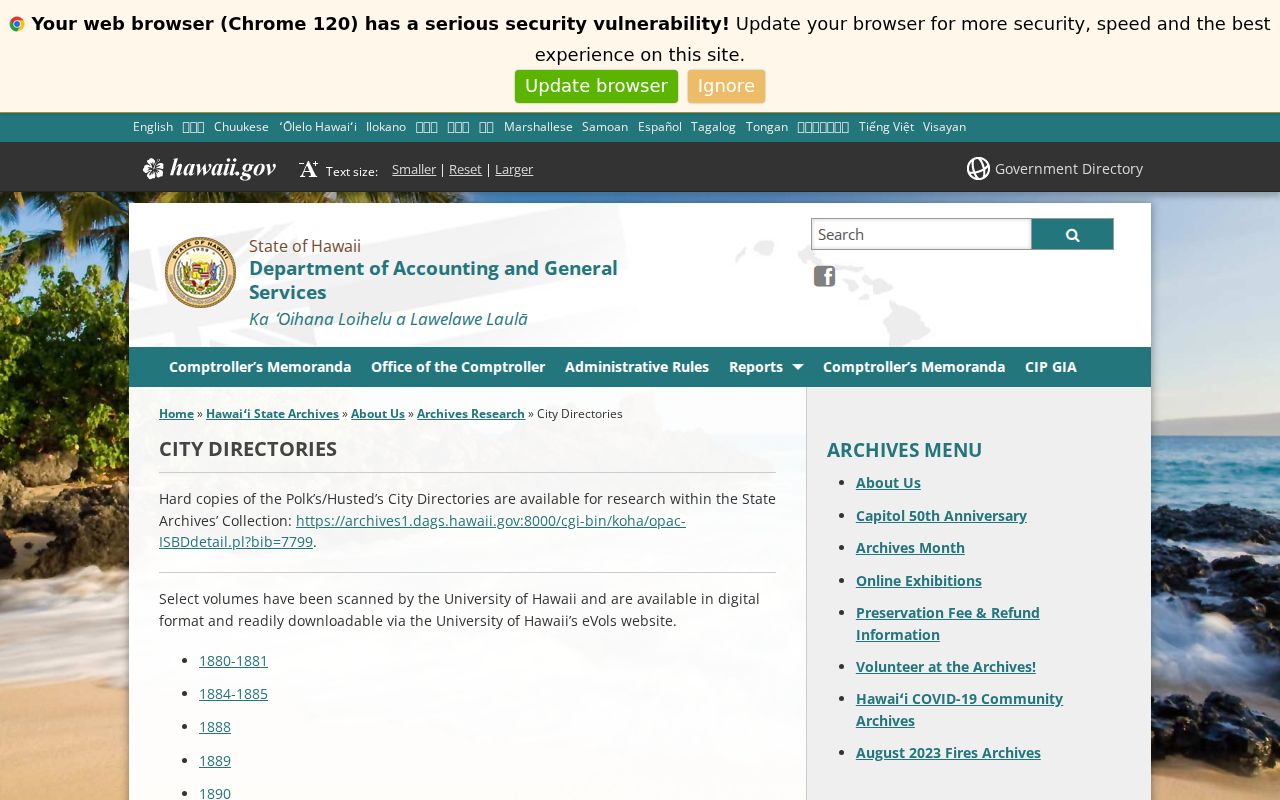
The holdings page is a starting map, while the full Honolulu city directory collection explains the publisher runs, reading-room routes, and ways to trace one household.
When Honolulu Portals End
Online access has clear edges. Pre-1976 deeds move to BOC Room 123 or a written search. Older permits may require the Department of Planning and Permitting's Data Access and Imaging Branch. Court files can require a clerk request. Vital certificates remain eligibility-gated. Historical names often live in archive microfilm, library catalogs, newspapers, cemetery indexes, church records, and FamilySearch rather than a current government portal.
For an otherwise public agency record, the Hawaiʻi Uniform Information Practices Act, HRS chapter 92F, supplies a request path. Identify the agency, describe the record with useful dates or numbers, choose inspection or a copy, and provide contact details. The Office of Information Practices model form also covers delivery format and fee-waiver requests. Search and review fees, segregation, prepayment, and response timing follow the UIPA rules.
- Roll
- A list maintained for an official purpose, such as property assessment or voting.
- Index
- A finding aid that points to a document but may not contain the full record.
- Parcel
- A mapped unit of land identified in Honolulu by a TMK.
- Criss-cross directory
- A directory arranged by street or phone number rather than only by surname.
Honolulu Records Changed in 2026
Several official systems changed during the research period. The State Archives announced free digital access to 64 index volumes in January 2026. The new material covers genealogy, land, court, and burial-related indexes. An index hit is a citation, not the full certified record, but it can reveal the series, volume, or name needed for a focused reading-room request. This is especially useful when a modern Honolulu residents directory search produces no result for a historic person.
Other changes affect current access. The Department of Health transferred divorce-record custody to the courts in February 2026. The Judiciary released a refreshed eCourt Kōkua manual in May. DCCA moved its business-registration workflow to Hawaiʻi Business Express in July, and the Department of Planning and Permitting has been shifting newer building data toward HNL Build while the inspected historical permit search carried data through July 28, 2025. A saved bookmark may therefore reach an old entry page even though the custodian and underlying record still exist.
Check the office page before relying on a fee, interface label, deadline, or delivery estimate. For a Honolulu record that moved, keep the old case number, TMK, permit number, business file number, or archive citation. Those identifiers travel more reliably than a portal URL. They also help staff locate the correct file through phone, mail, email, or an in-person counter when a public web search has changed. Keep a copy of the result heading and record date as well. A clear citation saves time when staff must search an older database, paper volume, or microfilm series.
Portal check. Record the search date and exact identifier, then verify the current custodian before ordering a copy or visiting an office.