
Honolulu Previous Resident Sources
Finding previous residents at one Honolulu address takes several records because ownership and occupancy are not the same fact. The current tax parcel supplies a TMK, site address, owner, and sales clues. Deeds carry the ownership chain. City directories and census schedules can identify a household, while permits date changes to the building. Obituaries and probate files can close a family trail. Each source covers a different era and answers a different question.
| Source | Years It Covers | Where Held | What It Shows |
|---|---|---|---|
| BOC online deed index | Generally 1976-present | Bureau of Conveyances | Parties, record date, document number, ordered image |
| BOC older books | Before 1976 | Room 123 or mail search | Liber, book/page, deeds, maps, and liens |
| RPAD parcel record | Current and historical fields | QPublic/RPAD | TMK, owner, assessments, sales, deed number |
| Honolulu directories | 1880s-1980s selected runs | Archives, UH, Hamilton, HSPLS | Names, work, and address clues |
| Federal census | 1900-1950 public | NARA, FamilySearch, libraries | Household members, ages, relations, district |
| DPP permits | Online data through 2025-07-28; older routes vary | DPP, HNL Build, DAIB | Construction, alteration, and approval dates |
Begin with RPAD for a modern parcel, then use the Bureau of Conveyances document number to walk back. For an early twentieth-century household, start with a directory or census and use the legal description to connect the old address to the parcel. No portal spans the whole period.
Start Honolulu Address History by TMK
Normalize the street address before searching. Keep the unit or condominium property regime detail, alternate spelling, neighborhood, and the current eight-digit TMK. Honolulu's RPAD search accepts street number, street name without the suffix, and unit information, or an eight-digit TMK without punctuation. Its parcel detail may show the fee owner, site address, sales history, land and building facts, and a BOC document number.
The owner field is not an occupant list. A mailing address can differ from the situs, which means the physical parcel address. Even a home exemption is only an assessment clue. Save the legal description and deed number because both remain more durable than a changed street name or postal format.
Note: RPAD receives deed data after recording and may take additional time to process, so confirm a recent transfer with the recorder.
Trace Honolulu Past Owners Backward
Hawaiʻi has one statewide Bureau of Conveyances rather than a county recorder. The online index generally reaches 1976 and requires an account, though registration enables a free search. Search by document number or grantor and grantee name, then compare the TMK, legal description, lot, file plan, and prior-document references. A deed transfers an interest; a mortgage, release, or lien does not.
- Copy the current TMK, owner, legal description, sales date, and document number from RPAD.
- Open the purchase deed and verify the parcel, parties, recording date, and instrument type.
- Take the seller, or grantor, and search that party as the grantee in an earlier purchase.
- Repeat the loop while matching the same land description and keeping Regular System and Land Court references distinct.
- When the web index ends, use the public reference room or written search for older book and page references.
- Grantor and grantee
- The grantor gives an interest; the grantee receives it.
- Chain of title
- The linked sequence of recorded transfers for the same land.
- Legal description
- The formal parcel description in a deed, more stable than a postal address.
BOC result fields may include record date, document group and name, document number, related documents, certificate number, book, page, and Tax/ID. Preserve each identifier exactly.
Honolulu Records Before 1976
BOC Room 123 bridges the online cutoff. The public reference room is normally open on business days from 8:15 a.m. to 3:30 p.m., though staffing and lunch can affect hours. Call 808-587-0147 before traveling. The written route asks for requester contact details, an approximate recording date, document or book/page reference if known, parties, document type, property address or TMK, certification choice, return method, payment, and a stamped return envelope.
Insider tip. Pre-1976 deeds and pre-1972 permit files have different bridges: use BOC Room 123 for title and DPP DAIB for old permits.
Older document numbers also change form. Pre-1990 records may use Liber, book, and page; later eras use year-plus-number or fixed-length document numbers. Do not force an old citation into the current format.
Honolulu Maps Preserve Address Identity
Street numbers and names can shift across Kingdom, territorial, military, subdivision, and modern condominium conventions. No complete official Honolulu renumbering chronology was found. Bridge a doubtful address with the TMK, deed legal description, lot or file plan, DPP permit, and a dated map.
The SHPD research library identifies Dakin Fire Insurance Maps for 1891 Honolulu, Sanborn and other fire-insurance maps, aerial photographs, DAGS survey maps, and Realty Atlas Hawaii tax maps. These can date a building footprint or neighborhood form, but an insurance map is not a title survey. Compare it with the recorded plat.
Search street names without a suffix and with likely old spellings. A changed address should not be treated as a new household until the land identifiers have been checked.
Honolulu Permits Date the House
A permit can show when a building was constructed, enlarged, altered, demolished, or reviewed. Honolulu's public permit route is in transition: the historical Building Permit Search contains data through July 28, 2025, while newer activity is moving through HNL Build. DPP's Data Access and Imaging Branch handles older material, including the pre-1972 gap.
Permit names need restraint. An applicant might be an architect, contractor, owner, or representative, not a previous resident. Use the application number, address, TMK, dates, and work description as building evidence. Then return to a directory, census, deed, or obituary for a household claim.
Pair Honolulu Directories and Census
Directories fill the years between public federal census schedules. Selected Honolulu scans cover dates from 1880-81 through 1924, while local print and film holdings continue into later decades. A volume may list a name, spouse, work, business, and address. A street section can reverse the search, but it must be confirmed in that edition.
The digitized 1924 Honolulu directory provides a concrete example of the scan and navigation tools used for past-resident research.
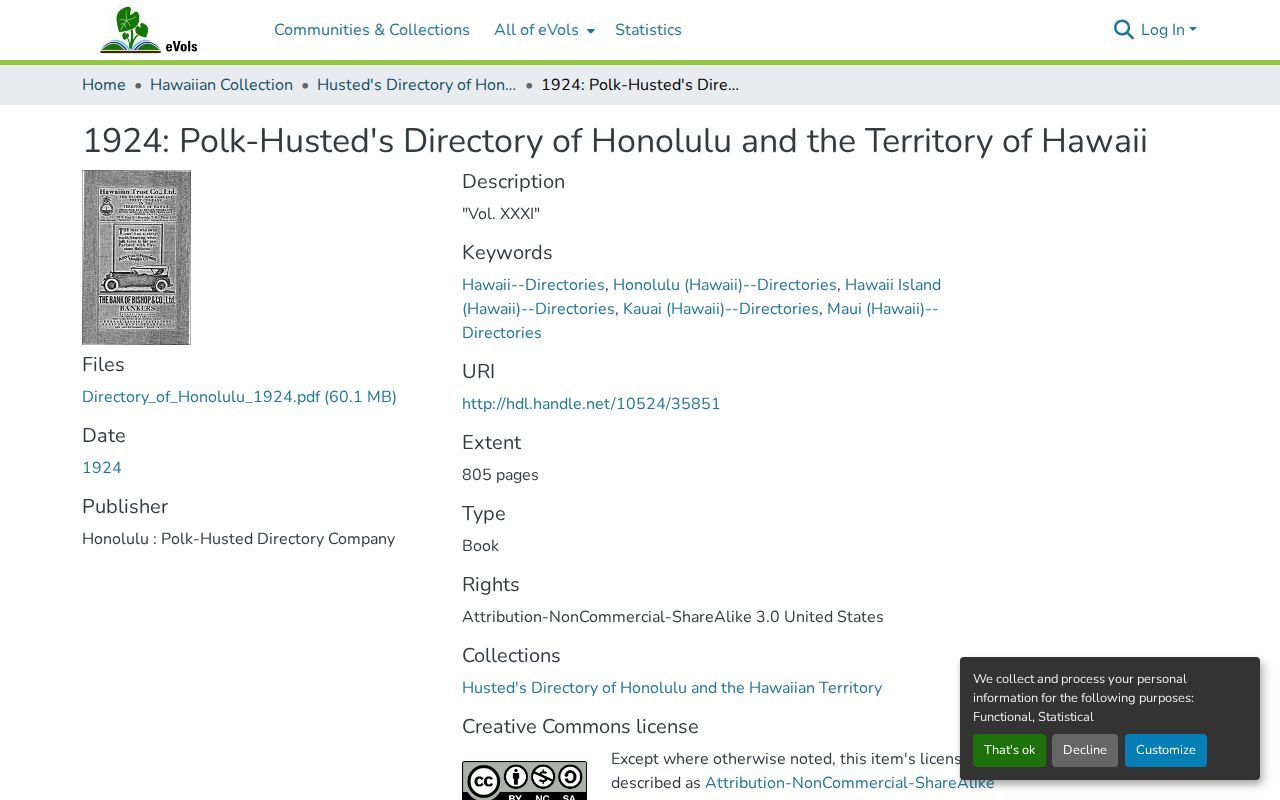
Save the volume year, page, printed spelling, address, relation, and work detail. Then compare the nearest public census, keeping the 72-year release rule in mind.
- Locate the address or surname in the nearest directory year.
- Move through adjacent editions and log gaps without calling them moves.
- Match the closest census by name, address or district, age, and relation.
- Test the household sequence against deeds, permits, and dated newspapers.
Honolulu Family Event Endpoints
Marriage, death, obituary, and probate records may explain a change in the household trail. Access differs sharply. The State Archives has an obituary index for 1836-1950 and historic Oʻahu vital reports for 1832-1929, but early reporting is incomplete. First Circuit probate records can identify heirs and property context when the file is public.
The Hawaiʻi Department of Health marriage-license page shows the official application route and its eMRS link.
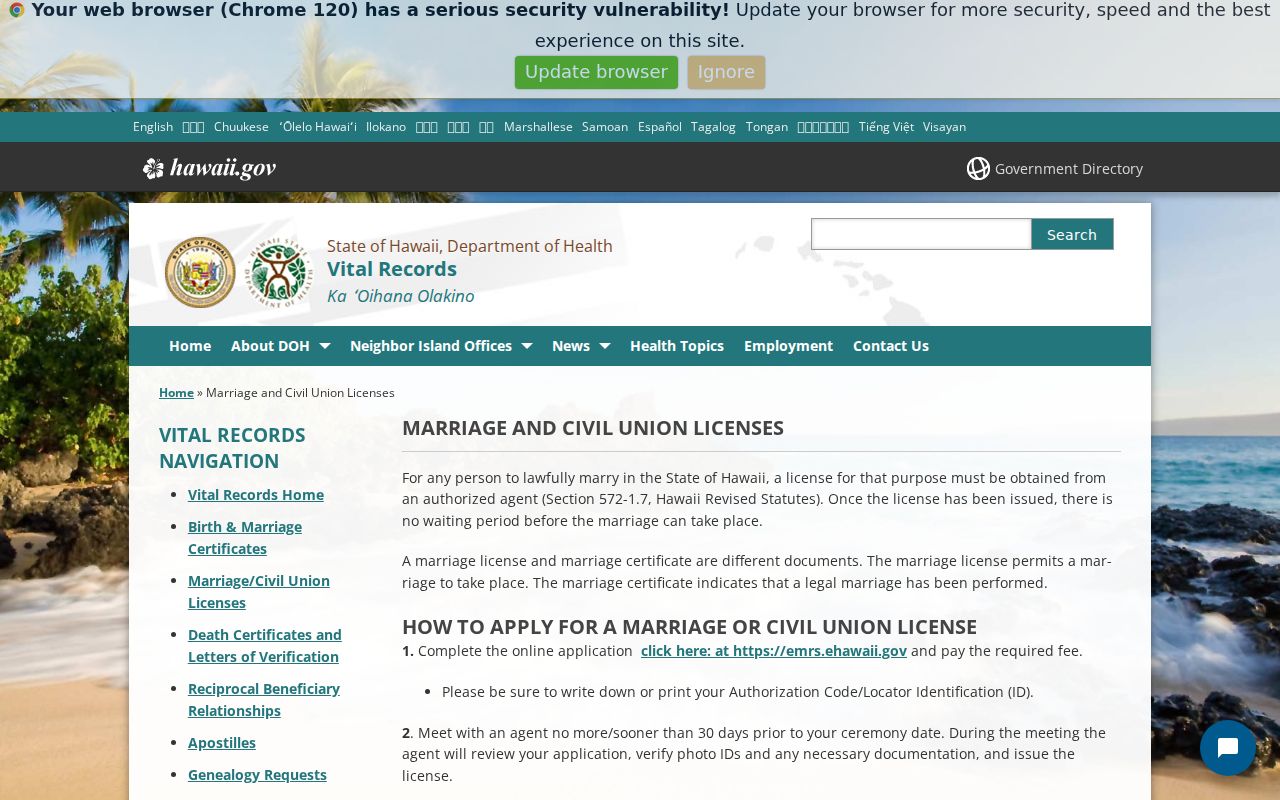
A marriage application route is not an open household index. Eligibility and certified-copy rules still apply. Use a releasable event record only for the event it documents.
New Honolulu History Index Leads
In January 2026, the Hawaiʻi State Archives announced free online access to 64 digitized index volumes. The named subjects include genealogy, land, court, and burial material. That expansion can uncover a citation when a person is absent from a directory or modern portal.
An index is a lead, not the full record. Copy the series and reference, then ask the Archives for the underlying item or visit the reading room. This distinction prevents a brief index line from being stretched into an unsupported household claim.
Verify Honolulu Past Households
The sound endpoint is the last fact that two compatible sources can support. A deed proves a title event, not everyone who lived there. A directory suggests a listed association, while a census can describe household composition for its enumeration date. An obituary may name relatives, and probate may connect an estate to property. None should be made to answer a question outside its record purpose.
When one index conflicts with another, return to the image, legal description, and date. Record spelling variants and possible omissions. The full publisher and shelf history belongs on the Honolulu city directory collections page; the backward address trail uses only the editions needed for the house.
Lawful use. Research Honolulu previous residents for family history, house history, or another lawful personal purpose. Never use an address trail to harass, threaten, or track a living person.
Stop where the source stops. A gap is honest, and it is safer than assigning an unverified person to an address.