
Honolulu City Directory Holdings
Honolulu city directory research begins with a shelf that spans several political eras. The earliest volumes call the place the Hawaiian Kingdom, later Husted titles use the Territory of Hawaii, and Polk-Husted eventually names the City and County of Honolulu. That changing title matters when searching a catalog. The Hawaiʻi State Archives keeps hard copies and points to selected scans in the University of Hawaiʻi eVols repository. Hamilton Library and the Hawaiʻi State Library extend the trail through microfilm, microfiche, print directories, and telephone books.
| Collection | Years | Where held | Access |
|---|---|---|---|
| Kingdom and early territorial directories | 1880-81 through 1910, selected years | State Archives and UH eVols | Free scans or reading room |
| Polk-Husted Honolulu directories | 1911 through 1941/42 | Hamilton, State Library, Archives | Microfilm, microfiche, and print |
| Polk City and County volumes | 1947/48 onward | Hamilton and HSPLS | Catalog and onsite access |
| Island directories and telephone pages | 1954-1987; selected 1969-1986 | Hamilton, HSPLS, Library of Congress | Microfiche, microfilm, selected scans |
The verified State Archives scan list is not continuous. It includes 1880-81, 1884-85, 1888, 1889, 1890, 1892, 1894-95, 1896-97, 1898, 1902, 1903-04, 1904-05, 1905-06, 1910, 1913, and 1924. A missing scan is not proof that no directory was printed. Check the library catalogs and ask staff about an onsite copy before treating a gap as a historical fact.
Honolulu Directory Names Changed
The title sequence is a useful timeline. The 1880-81 volume is the Hawaiian Kingdom Statistical and Commercial Directory and Tourist's Guide. McKenney followed in 1884-85. Husted titles appear by 1896-97, while Polk-Husted runs dominate much of the territorial and early city-county period. Search catalogs with both the publisher and the place name printed in that era.
| 1880-1895 | Kingdom and Hawaiian directory title families |
|---|---|
| 1896-1910 | Husted Honolulu and Hawaiian Islands or Territory titles |
| 1911-1941 | Polk-Husted Honolulu and Territory, then City and County |
| 1947/48 onward | Polk City and County of Honolulu runs |
This Honolulu city directory timeline also explains why one search phrase may miss a volume. Try “Kingdom of Hawaii,” “Territory of Hawaii,” and “City and County of Honolulu.”
Honolulu Directory Scans and Shelves
The Hawaiʻi State Archives city directory page is the best first inventory. It gives year links and the reading-room contact, while UH eVols hosts selected scanned volumes. The Archives reading room at 364 South King Street is open Monday through Friday, 9 a.m. to 4 p.m.; staff can also handle duplication or certification under its established process.
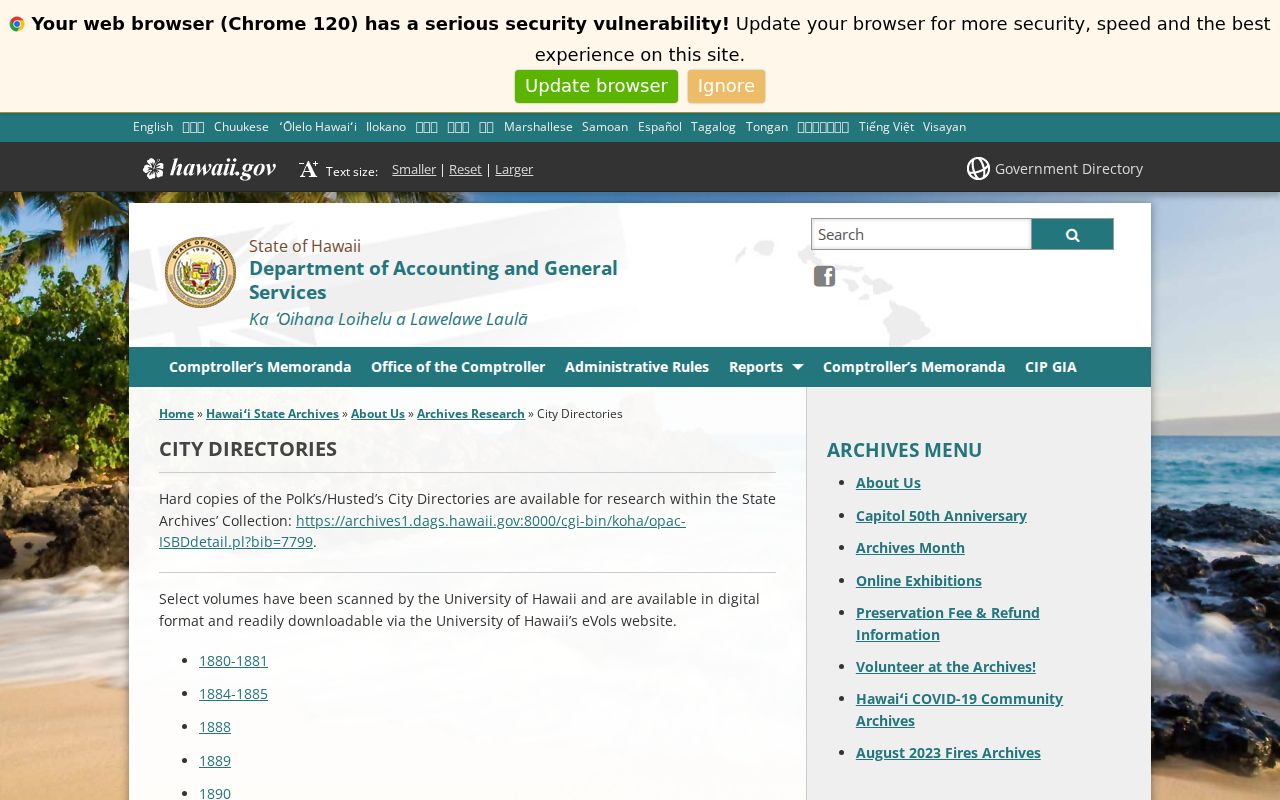
The captured holdings page makes the uneven run visible. Use the linked year first, then move to Hamilton Library or the Hawaiʻi and Pacific Section of the State Library when the needed edition is not online.
Hamilton's genealogy guide supplies the longer publisher chain. The State Library adds delayed vital indexes, newspaper microfilm, and licensed genealogy databases. These are complementary access channels, not duplicate shelves.
Honolulu Civic Directory Companions
Old directories gain context when paired with public civic records. The Neighborhood Commission Office organizes 36 board areas and links to agendas, minutes, resolutions, and board information. Those records may show a resident participating in a dated public meeting, but they do not form a resident roll.
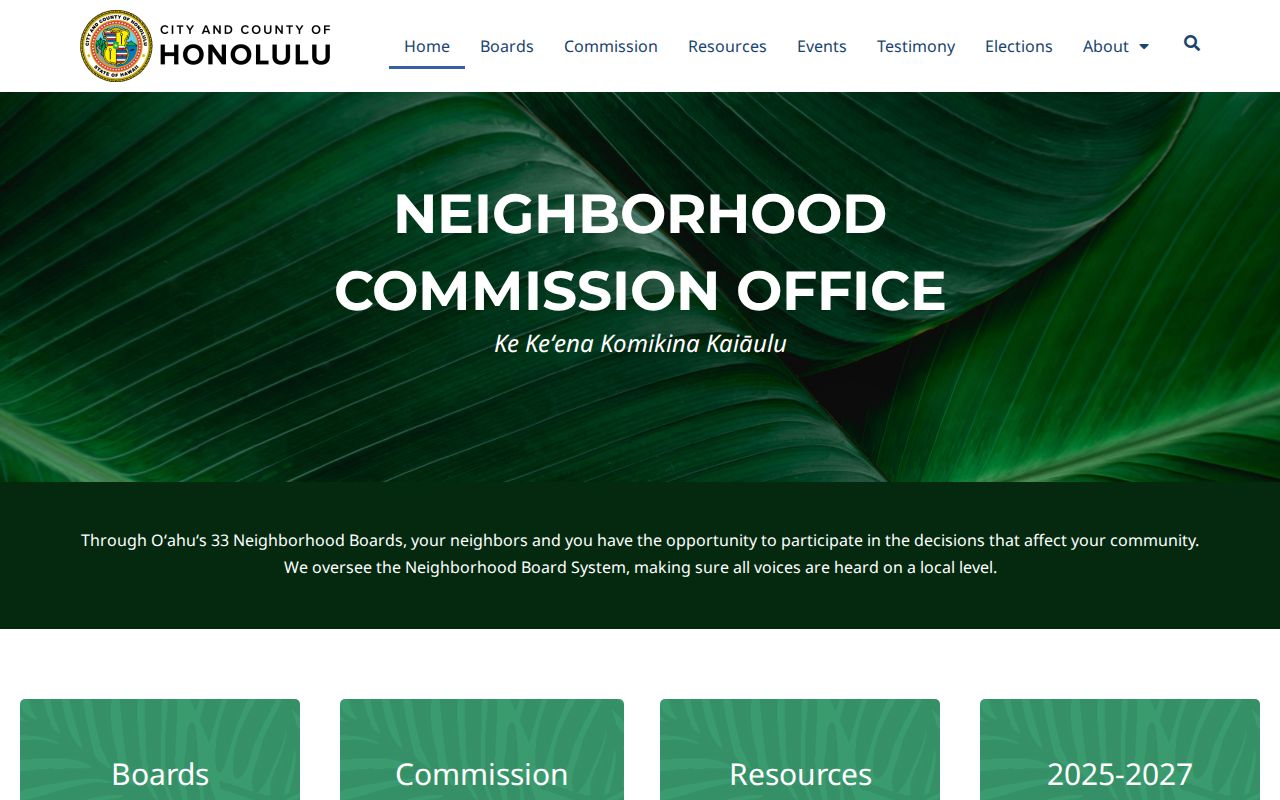
The board links help place a directory address within a later civic geography. Boundaries for boards, postal cities, census areas, and TMKs differ, so identify the system before drawing a location conclusion.
Honolulu Fire Department records can also supply a narrow, dated property event. Its information request wizard asks for incident or property details, a TMK, and requester contact information.
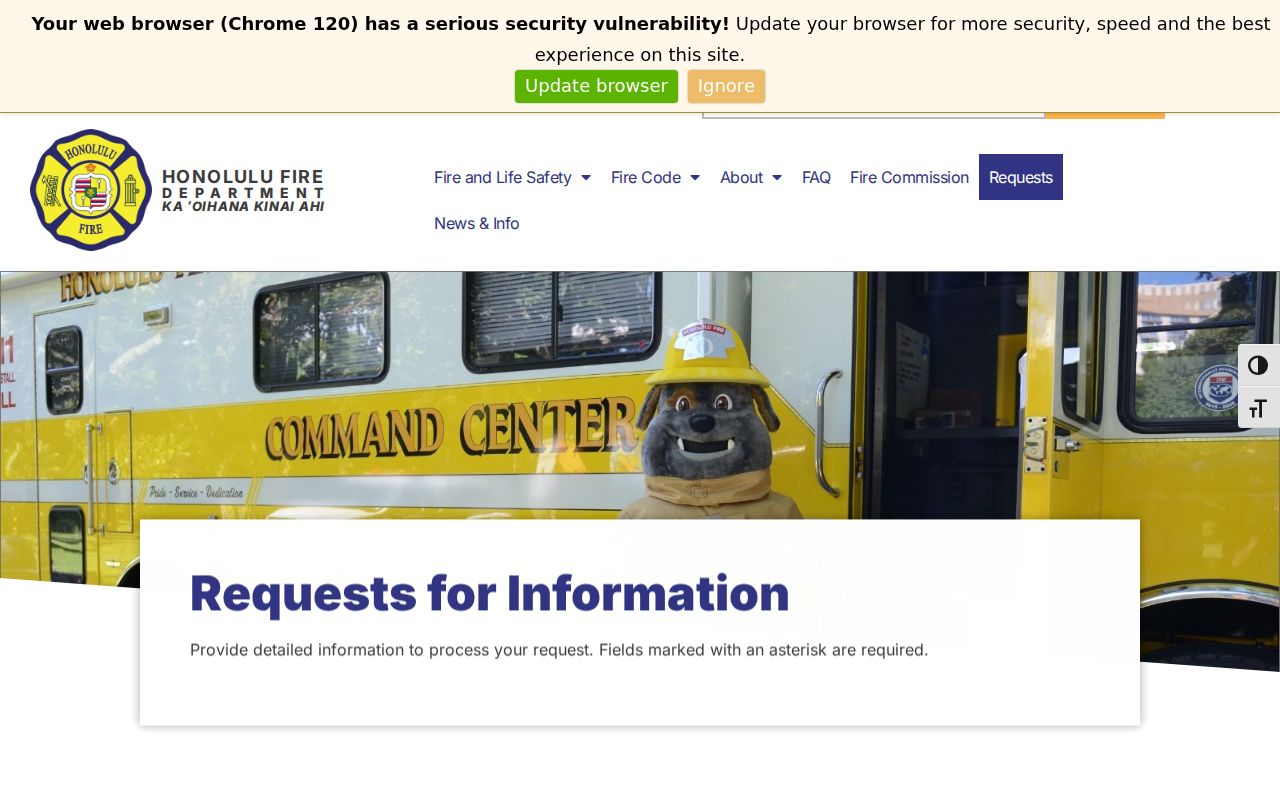
The form is a fallback for a known event, not a way to browse historic households. A precise date, address, or TMK gives staff a workable request.
Read a Honolulu Directory Entry
A Honolulu city directory entry can compress a household into one line. The alphabetical section may give a surname, initials, an honorific, a spouse or relation in parentheses, an occupation or employer, and a street address. Some volumes distinguish a residence from a place of business. The exact symbols change by edition, so inspect that volume's abbreviation key rather than importing modern meanings.
| Printed name | Surname, given name or initials, and sometimes a title |
|---|---|
| Relation | Spouse or household relation when the edition prints one |
| Work | Occupation, trade, employer, or business |
| Place | Street address and possible residence or business notation |
| Context | Nearby entries, section type, page, and volume year |
- Criss-cross directory
- A directory arranged by street or address, allowing an address-first search. Its presence must be checked volume by volume.
- Householder index
- A name or address list centered on the person identified as the household's main entry.
- Abbreviation key
- The edition's own list of shortened words and marks. Save it with every transcription.
Preserve Hawaiian spelling carefully. Search variants with and without the ʻokina or kahakō, initials, and older transliterations. Confirm a same-name result with at least two other details, such as an address and occupation.
Honolulu Address Sections Vary
A street section reverses the normal name search: find the street and number, then read the household or business printed there. It can reveal who was associated with an address between census years. Yet the official holdings page does not promise this feature in every Honolulu city directory. Inspect the table of contents and section headings in the exact edition.
Research tip. Save the title page, abbreviation key, page number, and entries around the target so another researcher can repeat the finding.
Absence has several meanings. The person may have arrived after canvassing, lived outside the printed area, appeared under a spouse, or been omitted. It is not sound proof of a move.
New Honolulu Historical Indexes
In January 2026, the State Archives announced free Digital Archives access to 64 newly digitized index volumes covering genealogy, land, court, and burial-related material. This is an important companion to city directories. An index can point to a person, date, series, and reference even when no directory entry is found.
The new access does not turn every underlying item into an online certified record. Copy the index citation, identify the holding series, and request the source item from the Archives when the image or legal proof is needed.
Honolulu Directory Newspaper Checks
The State Archives obituary index covers 1836-1950, mainly English-language Honolulu newspapers. Newspaper microfilm can test why a name vanished or why an address changed. The Archives, State Library, UH, and Hawaiian Historical Society hold different titles and formats, so ask by newspaper and date.
Use an obituary as an endpoint, not as proof of every household fact. It may identify relatives and a publication date. Probate, a later deed, or a census entry can then confirm the connection. The Hawaiian Historical Society's appointment reading room also provides newspaper, map, photograph, pamphlet, and manuscript guides, with limited paid research available for those unable to visit.
Trace Families in Honolulu Directories
City directories work best as a sequence. Begin near a known year, capture the whole entry, and move one available edition at a time. Pair the directory with federal census years for 1900 through 1950, then use deeds, permits, newspapers, and probate to test the story. A directory suggests an association with an address; it does not by itself prove title or every member of the household.
- Search the surname and its likely spelling variants in the nearest available year.
- Record the address, spouse notation, occupation, employer, page, and edition.
- Move backward and forward through adjacent volumes, noting both moves and gaps.
- Pair public census years with the directory sequence to check household composition.
- Use an obituary, probate file, deed, or permit only for the fact that source can support.
Modern address-keyed work belongs in the Honolulu street directory. For historical work, retain uncertainty. A gap may reflect missing coverage or a changed listing rule. A clear research log separates what the city directory prints from what later records confirm.